
The Hungry Streets is SAB Foods on wheels: a Malaysian food truck built to bring generous, recognisable dishes directly to offices, neighbourhoods, events and the everyday places people gather.
01 · Food made for the street
A focused menu that can travel without losing its character.
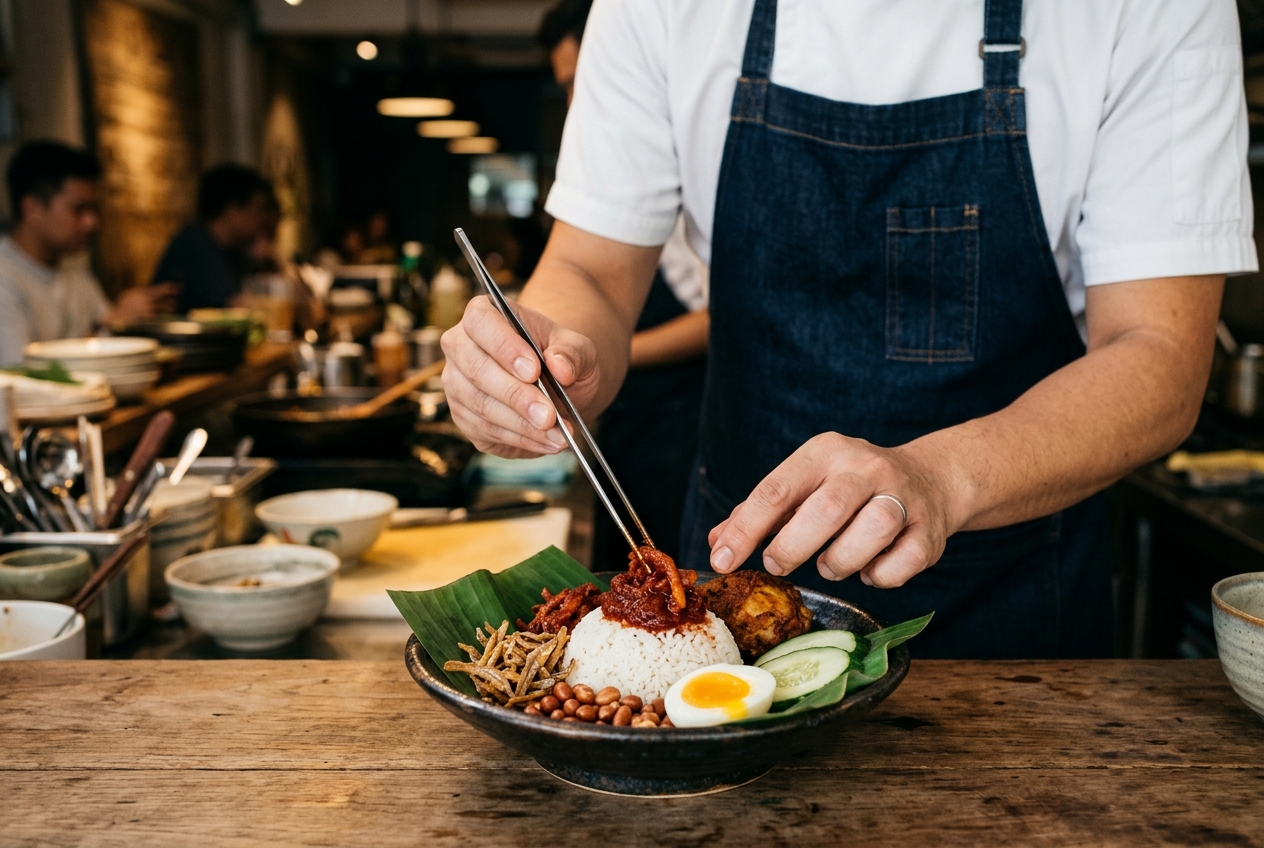
The Hungry Streets starts with Malaysian dishes people understand emotionally: fragrant rice, sambal, crisp chicken, buns and the condiments that make every plate feel personal. The food truck format keeps that offer direct. Guests can see where the food is coming from, speak to the team serving it and enjoy a meal that feels informal without feeling careless.
Every dish also has to work inside a compact mobile kitchen. Ingredients need to move across the menu intelligently, preparation has to hold up during a busy queue and packaging must protect temperature and texture after the guest walks away. A tighter menu gives the truck the discipline to do those things well while still leaving enough variety for people to return.
“The truck should feel spontaneous to the guest because the preparation behind it is carefully organised.”
02 · Running the truck well
Small space makes strong systems more important.
A food truck has no spare room for confused movement or unnecessary stock. Service depends on thoughtful prep, clear stations, food-safety routines and a team that understands the rhythm of the rush. The Hungry Streets treats those systems as part of hospitality. When the setup works, the people inside the truck can focus on serving quickly, speaking warmly and making each order feel looked after.
SAB Foods supports route planning, menu costing, procurement, brand and day-to-day operating decisions. The truck also gives the group immediate customer insight. The team can see what sells out, what slows the queue, which flavours bring people back and where the truck is most useful. That direct feedback makes improvement practical rather than theoretical.
03 · Taking the truck further
Growth follows the places where the food is wanted.
The Hungry Streets can move with demand in a way a fixed restaurant cannot. Office lunches, neighbourhood evenings, private events and larger gatherings each create a different reason to visit. The aim is to learn which locations and service windows produce the strongest experience, then return consistently enough to become part of people’s routine.
Over time, the food truck can support catering, events and selected new mobile formats, but it will remain grounded in the same promise: familiar Malaysian food served generously and without unnecessary distance between the kitchen and the guest. The truck is not a temporary version of the business. It is the business model — visible, flexible and close to the street.